How to Read a Lighthouse’s Changing Light System
Lighthouse illumination history becomes easier to read when you trace the lamp, optic, power route, and keeper’s work through the buildings on site.
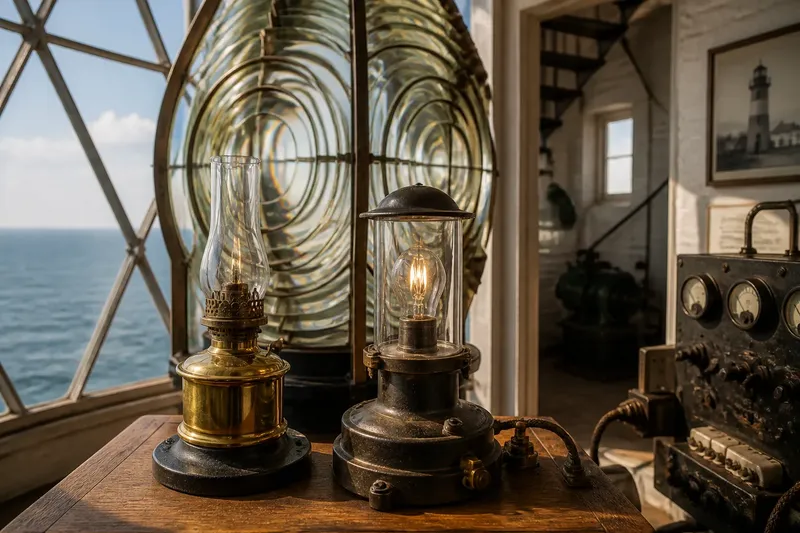
Lighthouse illumination history is easier to understand when you trace the lamp, optic, and power route through the station. A tower may hold equipment from several periods, so the age of its stonework does not tell you when its light changed.
Look for how the source of light was supplied and maintained, then compare it with the optic that directed the beam. That distinction helps you read the site without forcing every lighthouse into the same story of progress.
What should you check before visiting?
Start with the lighthouse’s visitor information, museum pages, or harbour heritage material. Check whether the site has its original lantern, a replica, or only the tower; then decide whether you will rely on exhibits, photographs, or views from outside.
Note any references to fuel stores, service stairs, ventilation, keepers’ rooms, or a generator house. These clues can help you connect the summit light with the working spaces below.
A lantern is the glazed room at the top of the tower. The illuminant is the flame or other source of light, while the optic directs or shapes that light. A station could change one part without replacing the others.
How did a flame become a useful signal?
An open fire in a brazier or grate could be seen from the water, but weather and fuel supply made it demanding to maintain. Smoke and soot were part of the work. Enclosing a flame in a lantern offered shelter, while oil lamps gave some stations a more controlled source.
A flame alone did not direct much light toward the sea. Reflectors could send light forward, and lenses or larger optics could gather and concentrate it. The lamp, its fuel, the lantern glass, and the optic worked together.
In a preserved lantern room, look at the position of the lamp relative to the optic. Ventilation openings or metal fittings may relate to the lighting system, but one feature alone cannot identify a lamp or its fuel. Check the site label before drawing a conclusion.
What changed with fuel lamps and electricity?
Fuel lamps required supplies to be delivered and stored. Some systems used pressure to improve the flame, bringing additional equipment and maintenance. A stronger source could work effectively with an optic, but it still needed attention.
Electric illumination changed the source and the work supporting it. A station using a local generator also had machinery to maintain; a later connection to a wider power network changed that arrangement. Electrical equipment could be added inside an older tower, so look for dates on the lamp, lantern, or switch panel rather than relying on the tower’s age.
Imagine you visit a coastal museum whose display shows an oil lamp beside a later electric fitting. You note that both sit within the same optic, then read the label, which dates the electrical change but does not give a date for the optic. Your resulting account is precise: the source changed, while the optic appears to have remained; its exact installation date is still unknown.
What questions help you read a lighthouse display?
Does an old tower mean its lamp is old too?
No. The tower, lantern, optic, and lamp can come from different periods. Look for a separate date or label for each feature.
Did electricity remove the need for on-site care?
Not by itself. Electrical equipment still needed attention, and generator-powered stations had machinery to monitor. The remaining duties depended on the station and its equipment.
Can you identify a lamp fuel by looking at a photograph?
Usually not with confidence. Several systems can look alike in a photograph, so use the museum label or site interpretation to identify the apparatus.
Why might an older optic remain after a lamp changed?
The optic directs light, while the lamp supplies it. If the existing optic remained suitable, a station could change its source without replacing the whole system.
Which site clues should you record?
- Check the site map: If it marks service buildings near the tower, note their names and compare them with exhibit descriptions; if it does not, use the visitor guide or display plan instead.
- Check for a fuel store: If a label connects a store to lamp supplies, include that link in your account; if its use is unclear, record it as uncertain rather than assigning it a purpose.
- Check the lantern or its photograph: If the lamp’s position relative to the optic is visible, describe that relationship; if the equipment is hidden, use a labelled diagram instead.
- Check for ventilation openings: If site interpretation links them to the lamp room, note that connection; if no explanation is provided, treat them as a clue, not proof of a particular fuel.
- Check for cables, switches, or a generator room: If a label dates them, separate that date from the tower’s construction; if no date appears, note the electrical feature without assigning a period.
- Check keeper-work displays: If they mention cleaning or repairs, connect those tasks to maintaining the light; if they describe another duty, keep it separate from lamp maintenance.
Before leaving, choose one feature that links the light to the people who maintained it, such as a stair, fuel store, or equipment room. Record what you observed and what the site confirms. Lighthouse illumination history becomes clearer when you keep those two kinds of evidence distinct, especially when an old structure contains newer equipment.